Skip to content
Language:
English (UK)
Risk Management

Hedging in a Negative Margin

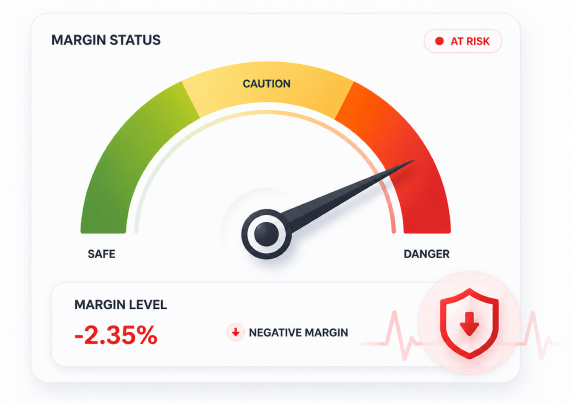
Hedging in a Negative Margin means opening a position in the opposite to help protect your account when margin turns negative. It’s a risk management tool to buy time until market conditions improve.
Opposite Position

Open a trade in the opposite to hedge your existing exposure.

Preserve Account Stability

Helps prevent further losses and gives your account time to recover.

Reduce Margin Pressure

Free up margin, reduce risk of liquidation and stabilize your account.

Market Flexibility

Choose the right moment to close or adjust positions based on market conditions.

How it works

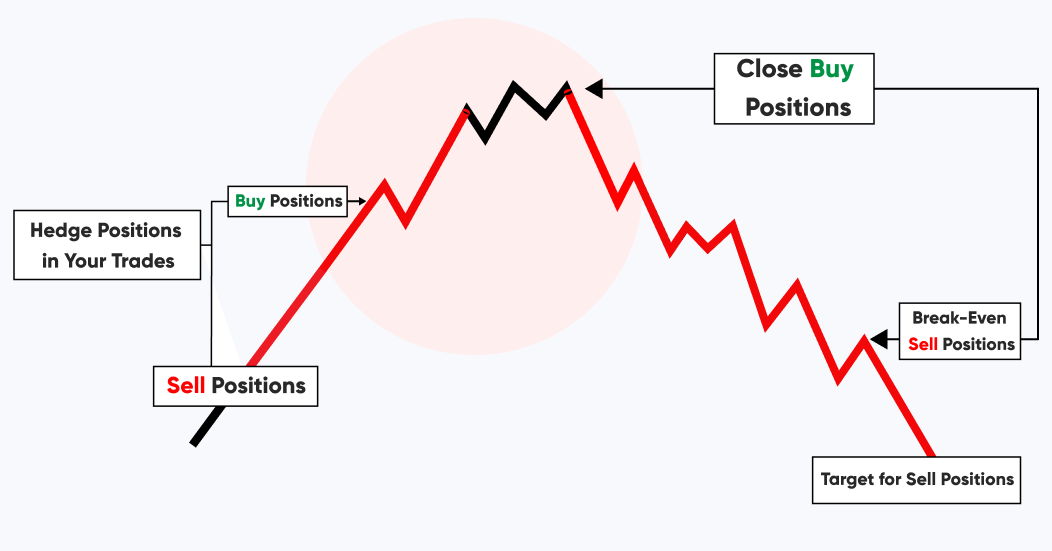
  • When your margin turns negative, your account is at risk of automatic closure. Hedging involves opening a position in the opposite direction using additional margin (e.g. $1,000) to stabilize your account.
  • For example, if you have a long position and open a short position of the same size, your account is hedged. Now any price movement affects both sides equally.
  • Hedging gives you time to wait for the market to move favorably, allowing you to close one side and reduce the loss.
  • Note that this is a temporary risk management tool, not a way to eliminate losses entirely.
  • Market makers cannot rescue your account from risk unless you add funds. Hedging is a short-term solution, not a replacement for proper risk management.

Example: Hedging in Action

Example: Hedging in action
1
Open initial position
(e.g. Buy)
2
Open opposite position
(Hedge)
3
Wait / Monitor the
market
4
Close hedge and target for
best outcome

Key Takeaway: Hedging in a Negative Margin means executing a trade in the opposite direction in critical situations when margin is negative, without adding more funds to the account.